
Chat with us
Free Shipping and Installation, No Cost EMI and COD

Articles

  • RO vs UV vs UF — Which Water Purifier Technology Do You Actually Need?

    Why the Technology Choice Matters More Than the Brand

    Walk into any electronics store or browse any e-commerce listing for water purifiers, and you’ll see three acronyms everywhere: RO, UV, and UF. Most buyers treat these as marketing labels — vaguely understanding that “more is better” and that the expensive model probably has all three.

    That’s a ₹10,000+ mistake waiting to happen. Here’s why: each technology solves a fundamentally different water problem. Choosing the wrong one doesn’t just waste money — it can mean your purifier isn’t actually making your water safe.

    • RO removes dissolved contaminants (TDS, heavy metals, nitrate, fluoride)
    • UV kills microorganisms (bacteria, viruses, protozoa)
    • UF physically blocks bacteria and suspended particles

    If your water’s primary problem is high TDS (common in most Indian cities), a UV purifier won’t help — no matter how expensive it is. If your water has low TDS but bacterial contamination from pipeline leaks, paying for RO is overkill. The right technology depends on your water, not on a brand’s marketing deck.

    The core principle: Test your water first, then choose the technology that addresses your specific contaminants. The brand and model come second. Getting the technology wrong means no amount of money spent on a premium model will protect you.

    RO (Reverse Osmosis) — The Heavy Lifter

    How It Works

    Reverse Osmosis forces water through a semi-permeable membrane with pores as small as 0.0001 microns — roughly 500,000 times thinner than a human hair. At this scale, only water molecules pass through. Everything else — dissolved salts, heavy metals, nitrate, fluoride, arsenic, pesticide residues — gets left behind and flushed out as reject water.

    What RO Removes

    • Dissolved solids (TDS): Reduces TDS by 90–99%. The only household technology that meaningfully lowers TDS.
    • Heavy metals: Lead, mercury, cadmium, arsenic, chromium — all reduced to safe levels.
    • Chemical contaminants: Nitrate, fluoride, sulphate, chloride.
    • Most bacteria and viruses: Physically too large to pass through the RO membrane (though this is a secondary benefit, not the primary purpose).

    What RO Cannot Do

    • It strips essential minerals too. Calcium, magnesium, and potassium are removed along with harmful contaminants. This is why a post-RO mineraliser is important — it adds back essential minerals to make the water healthy, not just clean.
    • It wastes water. Traditional RO systems reject 60–70% of input water. Modern high-recovery systems bring this down to 40–50%, but some wastage is inherent to the technology.
    • It needs electricity and water pressure. RO requires a pump to force water through the membrane. No power = no purification.
    When You Need RO

    If your input water TDS is above 300 ppm — which includes most of Delhi, Gurgaon, Hyderabad, Chennai, and any borewell-dependent area — RO is non-negotiable. No other household technology can remove dissolved solids at this level.

    UV (Ultraviolet) — The Steriliser

    How It Works

    A UV purifier exposes water to ultraviolet light at 254 nanometres — the wavelength that destroys the DNA of microorganisms, rendering them unable to reproduce and effectively killing them. The water flows past a UV lamp in a sealed chamber, and the entire process takes seconds.

    What UV Removes

    • Bacteria: E. coli, Salmonella, Cholera, and other waterborne bacteria — 99.99% elimination.
    • Viruses: Hepatitis A, Rotavirus, Norovirus — effectively neutralised.
    • Protozoa: Giardia, Cryptosporidium (though UV is less effective against cysts in their dormant stage).

    What UV Cannot Do

    • It does not remove anything physically. UV kills organisms, but their dead bodies remain in the water. No dissolved solids, chemicals, or particles are removed.
    • It does not reduce TDS. A UV purifier will not change your water’s TDS reading by a single ppm.
    • It requires clear water to work. If water is turbid (muddy or cloudy), UV rays can’t penetrate effectively, and organisms in the “shadow” of particles survive. Pre-filtration is essential.
    • It needs electricity. The UV lamp runs on power. No backup during outages.

    Think of UV as a disinfectant, not a filter. It’s excellent at making biologically unsafe water safe to drink — but it won’t change the taste, colour, or dissolved mineral content. If your water tastes salty or metallic, UV won’t help.

    UF (Ultrafiltration) — The Physical Barrier

    How It Works

    UF uses a hollow-fibre membrane with pores around 0.01 microns — large enough for water molecules and dissolved minerals to pass through, but small enough to physically block bacteria, cysts, and suspended particles. Unlike RO, UF works on gravity or low water pressure — no electricity needed.

    What UF Removes

    • Bacteria: Physically blocked by the membrane — removed, not just killed.
    • Cysts and protozoa: Giardia and Cryptosporidium cysts are too large to pass through UF pores.
    • Suspended particles: Sediment, rust, turbidity — cleared effectively.
    • Some larger parasites: Worm eggs, amoeba, and other macro-organisms.

    What UF Cannot Do

    • It cannot remove dissolved solids. TDS passes through UF membranes unchanged. Not suitable for high-TDS water.
    • It cannot kill viruses. Most waterborne viruses (0.02–0.3 microns) are smaller than UF pore sizes and pass through.
    • It cannot remove chemicals. Pesticides, fluoride, nitrate, and heavy metals are dissolved and pass through freely.

    The UF advantage: No electricity, no water wastage, low maintenance, and long membrane life (18–24 months). This makes UF ideal as a secondary stage in combination with RO or UV — or as a standalone option for areas with genuinely low-TDS, microbiologically safe water (rare in Indian cities).

    RO vs UV vs UF — Side-by-Side Comparison

    Parameter RO UV UF
    Removes dissolved solids (TDS)? Yes (90–99%) No No
    Kills bacteria? Yes (as a byproduct) Yes (primary function) Removes physically (not killed)
    Kills viruses? Yes Yes No (too small for UF pores)
    Removes heavy metals? Yes No No
    Removes nitrate/fluoride? Yes No No
    Needs electricity? Yes (pump + membrane) Yes (UV lamp) No
    Water wastage? 40–70% reject water None None
    Works with turbid water? Yes (with pre-filter) No (needs clear water) Yes
    Maintenance cost High (membrane + filters) Medium (lamp + pre-filter) Low (membrane only)
    Best for TDS range 300–2000+ ppm Under 300 ppm Under 200 ppm
    Typical price range ₹8,000–35,000 ₹5,000–15,000 ₹2,000–6,000

    Why Combinations Beat Single Technologies

    No single technology addresses all water quality problems. This is why almost every credible water purifier in India combines two or three of these technologies. Here’s what each combination gives you:

    RO + UV (Most Common)

    RO handles dissolved contaminants while UV provides secondary disinfection. This is the standard recommendation for Indian cities with TDS above 300 ppm — which is most of them. The UV stage acts as a safety net: if any microorganism survives the RO process or re-enters through the storage tank, UV catches it.

    RO + UV + UF (Comprehensive)

    Adds a UF stage as a third layer — physically blocking any remaining bacteria, cysts, or suspended particles that the RO membrane and UV stage might miss. This is the most thorough option and particularly valuable in areas with highly variable water quality (seasonal contamination, borewell + municipal mixing).

    UV + UF (Low-TDS Areas Only)

    For areas where TDS is consistently below 300 ppm and the primary concern is biological contamination. UV kills microorganisms, UF removes their remains physically. No water wastage, lower cost, lower maintenance. Genuinely suitable for some coastal Karnataka, Kerala, and Northeast Indian areas — but risky if your TDS fluctuates seasonally.

    The Indian Reality

    78% of Indian households with water purifiers use RO-based systems (with or without UV/UF). This isn’t brand marketing — it reflects the fact that most Indian tap water, borewell water, and tanker water has TDS above the 300 ppm threshold where RO becomes necessary.

    Which One Do You Need? A Simple Decision Guide

    Answer these three questions about your water, and you’ll know exactly which technology you need.

    Your Water Purifier Decision Tree
    Step 1: What is your water’s TDS?
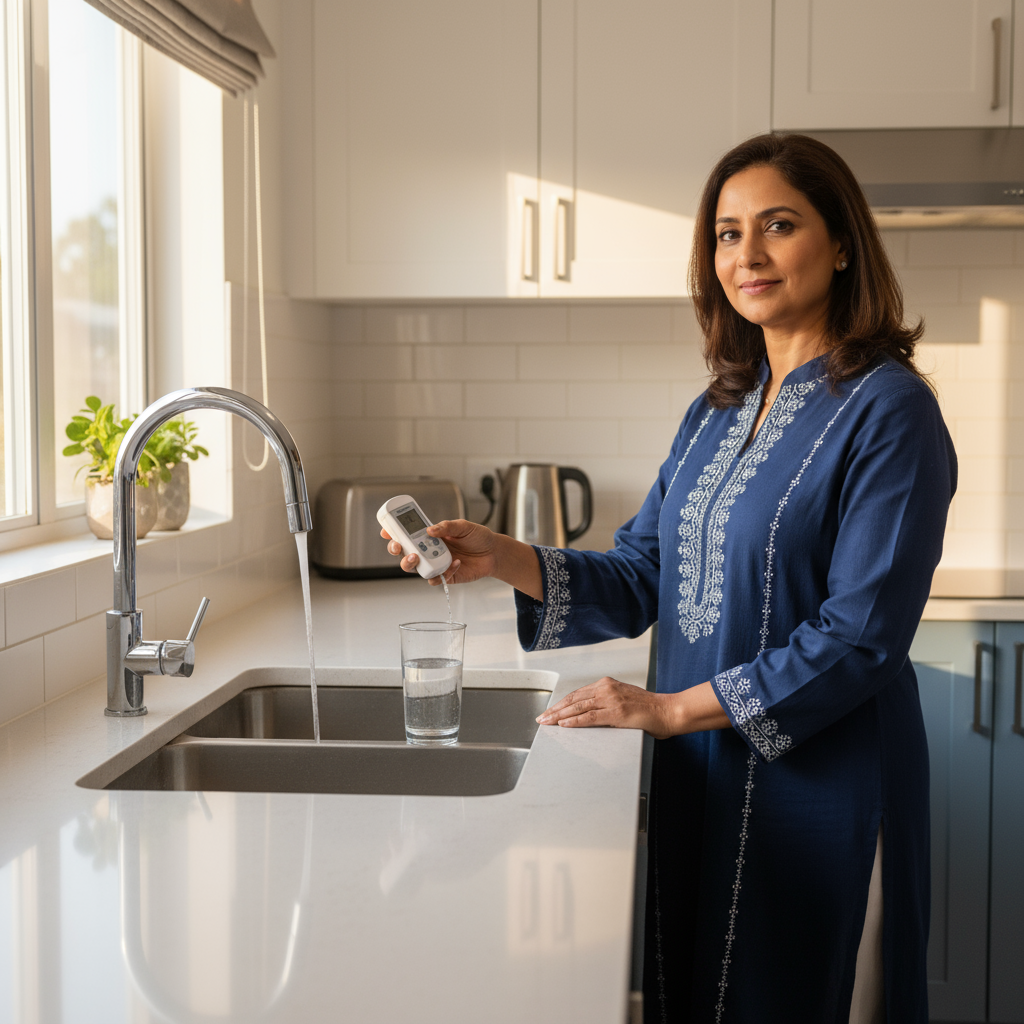
    Use a TDS meter (₹200–500 on Amazon) or ask your purifier brand for a free reading. Above 300 ppm → you need RO. Below 300 ppm → proceed to Step 2.
    Step 2: What is your water source?
    Municipal supply with regular chlorination → UV+UF may work. Borewell, tanker, or mixed supply → RO+UV is safer, regardless of TDS reading, because these sources carry chemical contaminants that TDS meters don’t fully capture.
    Step 3: Does your area have seasonal water quality variation?
    Monsoon contamination, summer groundwater changes, or construction-disturbed pipelines? Go with RO+UV+UF for year-round safety. Stable, consistent supply year-round? Your Step 1–2 answer stands.

    The practical shortcut: If you live in Delhi, Gurgaon, Bangalore, Hyderabad, Chennai, Pune, Ahmedabad, or any city where borewell water supplements municipal supply — RO+UV is the minimum safe choice. When in doubt, err on the side of more filtration, not less.

    5 Mistakes Buyers Make When Choosing a Technology

    1. Buying UV When They Need RO

    UV purifiers are cheaper. That makes them tempting. But if your TDS is 500 ppm, a UV purifier will give you bacteria-free water that still contains dissolved lead, nitrate, and fluoride. The water passes lab microbiology tests — but fails the chemistry test. You drink “safe” water that’s slowly accumulating heavy metals in your body.

    2. Assuming All RO Purifiers Are the Same

    The number of filtration stages matters. A 4-stage RO purifier handles dissolved solids but may miss chlorine taste (needs activated carbon), mineral restoration (needs a mineraliser), and virus protection (needs UV). An 8-stage system addresses the complete contamination profile. More stages isn’t marketing — each targets a specific contaminant type.

    3. Ignoring the Post-RO Mineral Problem

    RO strips everything — including calcium and magnesium that your body needs. Drinking demineralised water long-term can cause mineral deficiency, especially in children and the elderly. Look for a purifier with a proper post-RO mineraliser (not just a TDS controller that blends raw water back in — that reintroduces contaminants).

    4. Choosing Based on TDS Alone

    TDS meters measure total dissolved solids — but they don’t tell you what’s dissolved. Water at 400 ppm could be mostly harmless calcium and magnesium (hard water), or it could contain dangerous levels of lead and arsenic with some calcium. This is why borewell and industrial-area water should always go through RO, even if the TDS reading seems “moderate.”

    5. Buying UF-Only for City Water

    UF-only purifiers are marketed as “no electricity, no wastage” alternatives. True — but they cannot remove dissolved contaminants, viruses, or chemicals. In Indian cities where pipeline contamination is the norm and TDS is variable, UF alone provides a false sense of security. UF works best as one stage in a multi-stage system, not as the only technology.

    How Boon Homie Combines All Three

    Boon Homie uses an 8-stage UltraOsmosis filtration system that combines RO, UV, and UF in a single unit — each stage targeting a specific contaminant type rather than relying on one technology to do everything.

    What Each Stage Does

    • Stages 1–2 (Sediment + Carbon Pre-Filter): Remove suspended particles, chlorine, and organic compounds — protecting the RO membrane and extending its life.
    • Stage 3 (RO Membrane): Handles dissolved solids, heavy metals, nitrate, fluoride, and arsenic. Rated for up to 2000 ppm input TDS — covering even extreme borewell water.
    • Stage 4 (UF Membrane): Physical barrier that catches any bacteria, cysts, or particles that may bypass the RO stage.
    • Stage 5 (UV Disinfection): Kills any remaining viruses and microorganisms — the final biological safety net.
    • Stages 6–8 (Carbon Polish + Mineraliser + Final Filter): Restores essential minerals, improves taste, and provides a final quality check before water reaches your glass.

    60 Litres Per Hour

    Most purifiers deliver 15–20 litres per hour. For a family of 4–6 that uses purified water for drinking, cooking, and rinsing, that means waiting during peak hours. Boon Homie purifies at 60 LPH — fast enough that you never run dry.

    WaterAI Smart Monitoring

    Instead of replacing filters on a fixed calendar, WaterAI tracks actual filter performance in real time. You see input/output water quality, filter degradation curves, and exact replacement timing on your phone. This means you don’t replace too early (wasting money) or too late (compromising safety). The system won the iF Design Award 2026.

    8-stage RO+UV+UF. 60 LPH. Free installation. Real-time WaterAI monitoring.

    Buy Boon Homie →

    Frequently Asked Questions

    Which is better — RO, UV, or UF water purifier?

    It depends on your water. RO is the only technology that removes dissolved solids (TDS above 300 ppm), heavy metals, and chemical contaminants — essential for most Indian cities. UV kills bacteria and viruses but doesn’t filter anything out. UF removes bacteria and particles without electricity but can’t handle dissolved contaminants or viruses. For most Indian households, RO+UV is the recommended minimum.

    Can I use a UV water purifier for borewell water?

    UV alone is not recommended for borewell water. Borewells typically have high TDS (500–2000+ ppm), dissolved iron, fluoride, and hardness — none of which UV removes. You need an RO+UV purifier with a membrane rated for your borewell’s TDS level. Always get your borewell water tested before choosing a purifier.

    Does RO water purifier waste a lot of water?

    Traditional RO systems reject 60–70% of input water. Modern systems with recovery technology bring this down to 40–50%. The reject water isn’t contaminated — it’s concentrated with dissolved solids but perfectly usable for mopping, plant watering, or flushing. If water wastage concerns you, look for purifiers with a higher recovery ratio and collect the reject water for household use.

    Is RO water purifier necessary for municipal supply?

    It depends on your municipality’s water quality. If TDS is consistently below 300 ppm with no heavy metals, UV+UF may suffice. But most Indian municipal supplies have pipeline contamination, intermittent supply, and TDS above 300 ppm. The only way to know is to test your tap water. When in doubt, RO+UV is the safer choice.

    What is the difference between UF and UV water purifier?

    UF (Ultrafiltration) physically filters water through a fine membrane (0.01 micron) — it removes bacteria, cysts, and particles without electricity, but can’t remove viruses or dissolved solids. UV (Ultraviolet) uses UV light to kill bacteria, viruses, and microorganisms — it needs electricity and doesn’t physically remove anything (dead organisms stay in the water). In short: UF filters, UV kills. Both work best when combined with each other or with RO.

    Not sure which technology your home needs? Boon Homie’s 8-stage system covers all three — RO, UV, and UF — so you don’t have to choose.

    Shop Boon Homie →

  • True Cost of Owning a Water Purifier

    The Hidden Cost Problem Nobody Talks About

    When you shop for a water purifier in India, the conversation centres on one number: the MRP. One brand costs ₹18,000. Another costs ₹15,000. A third costs ₹8,000. You compare these numbers, pick the one that fits your budget, and feel like you’ve made an informed decision.

    You haven’t. The sticker price of a water purifier is typically only 35–45% of what you’ll actually pay over three years.

    The Reality of Water Purifier Pricing
    ₹8,000
    Sticker Price
    ₹22,000
    3-Year Reality

    The remaining 55–65% comes from filter replacements, annual maintenance contracts (AMC), service visit charges, installation fees, and a collection of small costs that individually seem trivial but compound aggressively over 36 months.

    This isn’t a criticism of the industry. Water purifiers have consumable parts — filters, membranes, UV lamps — that genuinely need periodic replacement. The problem is opacity. When brands don’t publish transparent lifetime costs, buyers can’t make real comparisons. A purifier priced at ₹8,000 with expensive proprietary filters might cost more over three years than a ₹15,000 purifier with affordable, standard-size replacements.

    The rule of thumb: multiply the sticker price by 2.5–3x to estimate your true 3-year cost. A ₹10,000 purifier will cost ₹25,000–30,000. A ₹20,000 purifier will cost ₹50,000–60,000. If the number surprises you, you’re not alone — and you’re exactly who this guide is for.

    Anatomy of Water Purifier Ownership Costs

    Every rupee you spend on your water purifier falls into one of six categories. Understanding each one is the foundation of making a cost-aware purchase.

    1. Purchase Price (One-Time)

    The MRP or sale price you pay at the point of purchase. This varies from ₹6,000 for basic RO models to ₹35,000+ for premium purifiers with hot/cold dispensing. Festive discounts (October–November sales) typically offer 10–15% off — meaningful, but a small fraction of lifetime cost.

    2. Installation (One-Time)

    Ranges from free (some brands, including Boon) to ₹500–1,500 (most others). Some brands charge extra for drilling, plumbing fittings, or non-standard wall mounting. Always confirm what’s included before the technician arrives.

    3. Filter and Membrane Replacements (Recurring)

    This is the biggest ongoing cost — and the most variable. It depends on your input water quality, daily consumption, and the brand’s filter pricing. More on this in the next section.

    4. AMC / Annual Maintenance Contract (Recurring)

    A pre-paid service plan that typically covers 2–4 scheduled visits per year, labour charges, and sometimes spare parts. Prices range from ₹999 to ₹5,800 per year. Whether it’s worth it depends on what’s actually included — many AMCs cover labour but charge separately for parts.

    5. Service Visit Charges (Pay-Per-Use)

    If you don’t have an AMC, each service call costs ₹300–800 for the visit alone, plus parts. Expect 2–3 unplanned service calls per year on top of routine filter changes, especially in years 2–3 when components start aging.

    6. Electricity (Ongoing)

    Often overlooked but real. An RO purifier typically consumes 25–60 watts during operation. At average Indian electricity rates (₹6–8/kWh), this translates to ₹300–700 per year for a household processing 15–20 litres daily. Not a deal-breaker, but it adds up.

    Filter Replacement Costs: What Each Part Actually Costs

    A typical RO water purifier has 5–8 filter stages. Each has a different lifespan and replacement cost. Here’s the realistic breakdown based on published service centre pricing and e-commerce listings (2026):

    Component Typical Lifespan Replacement Cost Notes
    Sediment Pre-Filter 3–6 months ₹300–800 Cheapest and most frequently replaced. Catches visible particles.
    Carbon Pre-Filter 6–12 months ₹400–1,200 Removes chlorine and organic compounds. Essential for protecting the RO membrane.
    RO Membrane 12–24 months ₹1,000–3,000 The most important (and expensive) component. Lifespan depends heavily on input TDS. High-TDS areas (500+ ppm) may need annual replacement.
    UV Lamp 12–18 months ₹600–1,500 Degrades over time even if functional. Should be replaced proactively, not after failure.
    Post-Carbon Filter 12 months ₹400–1,000 Polishes taste. Often overlooked in service visits — insist on replacement.
    Mineraliser Cartridge 6–12 months ₹500–1,500 Present in models that add back minerals post-RO. Not all purifiers have this.
    UF Membrane 18–24 months ₹800–2,000 If your purifier has a UF stage. Longer-lasting than RO membrane.
    The Filter Math

    For a typical 7-stage RO+UV purifier in a household with TDS 500+ ppm (family of 4, using 15 litres/day), expect to spend ₹3,500–6,000 per year on filter replacements alone. That’s ₹10,500–18,000 over three years — potentially more than the purifier’s sticker price.

    The Proprietary Filter Trap

    Some brands use proprietary filter sizes or non-standard connectors. This means you can’t buy third-party replacements — you’re locked into the brand’s pricing. Before purchasing any purifier, check whether its filters are available from multiple suppliers or exclusively from the manufacturer. Exclusivity often means 30–50% higher replacement costs.

    AMC Decoded: What You’re Actually Paying For

    Annual Maintenance Contracts are the water purifier industry’s recurring revenue engine. They range from genuinely useful to borderline unnecessary, depending on the plan and your situation. Here’s what the tiers typically include:

    Basic AMC (₹999–2,000/year)

    • 2 scheduled service visits per year
    • Labour charges covered
    • Basic checks: TDS reading, leak inspection, sanitisation
    • Parts NOT included — you pay separately for any filters or components

    Comprehensive AMC (₹2,500–5,800/year)

    • 3–4 scheduled service visits per year
    • Labour + most spare parts included (read the fine print — RO membrane is sometimes excluded)
    • Priority service response
    • Emergency visit coverage

    When AMC Makes Sense (and When It Doesn’t)

    Year 1: Skip the AMC. Your warranty covers manufacturing defects and most component failures. Use the warranty — that’s what it’s for.

    Years 2–3: A basic or comprehensive AMC is usually worth it. This is when the RO membrane, UV lamp, and carbon filters reach end-of-life. Individual service visits (₹300–800 each) plus parts purchased separately will often exceed the comprehensive AMC cost.

    Year 4+: Re-evaluate. If your purifier needs frequent repairs beyond routine filter changes, the AMC cost plus filter costs may approach the price of a new mid-range purifier. At this point, calculate whether continued maintenance or replacement makes more financial sense.

    The AMC rule: Always ask “Does this AMC include the RO membrane replacement?” If no, add ₹1,500–3,000 on top of the AMC price. Many “comprehensive” plans quietly exclude the single most expensive component.

    3-Year Cost by Price Tier

    Here’s where the maths gets real. We’ve estimated the total 3-year cost across three common price tiers, assuming a family of 4 in a city with moderate-to-high TDS (400–700 ppm), processing approximately 15 litres of purified water per day.

    These estimates use published pricing from service centres and e-commerce platforms as of May 2026. Actual costs vary based on your specific model, water quality, and usage patterns.

    Cost Component Budget RO (₹7–9K) Mid-Range RO (₹14–18K) Premium RO (₹25–35K) Boon Homie
    Purchase Price ₹8,000 ₹16,000 ₹30,000 Competitive
    Installation ₹500–700 ₹500–1,000 Free–₹1,000 Free
    Pre-filter (included?) No (₹500) No (₹600–800) Sometimes Yes (free)
    Year 1 Filters ₹1,500 ₹1,200 ₹2,000 Data-driven*
    Year 2 Filters + Membrane ₹3,500 ₹4,500 ₹5,000 Data-driven*
    Year 3 Filters + UV Lamp ₹3,000 ₹4,000 ₹4,500 Data-driven*
    AMC (Years 2 & 3) ₹3,000–4,000 ₹5,000–7,000 ₹6,000–10,000 Transparent
    Emergency Service (est.) ₹1,500 ₹1,500 ₹1,200 Own technicians
    Electricity (3 years) ₹1,200 ₹1,500 ₹2,000 ₹1,500
    Est. 3-Year Total ₹22,700–24,200 ₹34,300–39,200 ₹50,700–55,700 Lower TCO**

    * Boon Homie’s WaterAI monitoring replaces filters based on actual degradation data, not fixed schedules — reducing premature replacements.
    ** Contact Boon for transparent TCO calculation based on your water quality and family size.

    The Multiplier Effect

    A budget purifier at ₹8,000 sticker price costs approximately ₹22,000–24,000 over 3 years — a 2.8–3x multiplier. A mid-range purifier at ₹16,000 reaches approximately ₹34,000–39,000 — a 2.1–2.4x multiplier. Generally, cheaper purifiers have higher multipliers because their lower-cost components need more frequent replacement. But that doesn’t always make expensive purifiers the better value — calculate the absolute 3-year number, not the ratio.

    5 Hidden Charges Nobody Tells You About

    1. The “First Service” Charge

    Some brands offer free installation but charge for the “first service visit” 3–4 months later. This visit often includes replacing the sediment pre-filter and checking connections — work that should be covered under warranty. Ask explicitly: “Are service visits in year 1 free under warranty?”

    2. Non-Standard Fitting Charges

    If your kitchen tap, inlet pipe, or mounting wall doesn’t match the technician’s standard setup kit, you’ll pay extra for adapters, extended tubing, or additional drilling. This can add ₹300–1,000 to your installation cost. Some brands include a longer tubing kit by default; others charge per metre.

    3. The “Original Parts” Premium

    When you buy filters during a service visit (rather than ordering online), service centres often charge 20–40% more than the same component on Amazon or the brand’s own website. Always check online pricing before your service appointment.

    4. Tank Sanitisation Fees

    Some AMCs don’t include storage tank sanitisation — a service that should happen every 6–12 months to prevent biofilm buildup. This is sometimes listed as an “add-on” at ₹200–500 per visit. Check whether your AMC covers it.

    5. Deinstallation and Reinstallation Charges

    Moving houses? Your purifier needs to be professionally deinstalled, transported, and reinstalled. Most brands charge ₹800–2,000 for this process, and your AMC typically doesn’t cover it. If you’re a renter who moves frequently, factor in 1–2 relocations over your purifier’s lifetime.

    How Smart Monitoring Cuts Your Long-Term Costs

    Traditional water purifiers operate on a “replace by calendar” model — change the sediment filter every 3 months, the RO membrane every 12 months, regardless of actual filter condition. This creates two problems:

    1. Premature replacement: If your water quality is good or your usage is lower than average, you’re throwing away filters with remaining useful life. This can add 20–30% to your filter spend over three years.
    2. Late replacement: If your water quality is worse than average or usage is higher, fixed schedules may leave degraded filters in place for weeks or months — compromising water quality without you knowing it.

    Smart monitoring — like Boon’s WaterAI system — addresses both problems by tracking actual filter performance in real time. Instead of replacing on a schedule, you replace when data shows the filter has actually reached end-of-life. This is the same principle that made oil-change intervals in modern cars extend from 3,000 km to 10,000+ km: sensors replaced assumptions.

    The iF Design Award 2026-winning WaterAI system monitors three parameters continuously:

    • Water quality: Input and output TDS, ensuring the RO membrane is performing to spec
    • Filter health: Flow-rate degradation curves that predict remaining filter life with precision, not rules of thumb
    • Usage patterns: Daily consumption data that helps right-size your service schedule

    The financial impact is straightforward: data-driven replacements typically reduce annual filter spend by 15–25% compared to calendar-based replacement schedules, while simultaneously ensuring you never run degraded filters.

    The TCO Checklist: 8 Questions to Ask Before You Buy

    Print this list. Take it to the showroom or keep it open during your online research. Any brand that can’t answer these transparently is probably hiding unfavourable numbers.

    1. What is the total estimated cost of ownership for 3 years? — Not just MRP. Total. Including AMC, filters, installation, and electricity.
    2. Is installation genuinely free? What about non-standard fittings? — Get a written confirmation of what’s included.
    3. What does each filter replacement cost, and how often? — Get a line-item list. Multiply out for 3 years.
    4. Does the AMC include the RO membrane? — The single most important AMC question. Don’t skip this.
    5. Are the filters proprietary or standard-size? — Can you buy compatible replacements from third parties?
    6. Who does the service — brand employees or outsourced partners? — This affects reliability, accountability, and consistency.
    7. How does the purifier signal that a filter needs replacement? — Timed indicator? Manual check? Real-time monitoring? This determines whether you’re replacing on data or guesswork.
    8. What does relocation (deinstallation + reinstallation) cost? — Critical for renters.

    Free installation, free pre-filter, real-time filter monitoring — so you only replace what needs replacing.

    Explore Boon Homie →

    Frequently Asked Questions

    How much does water purifier maintenance cost per year in India?

    Annual maintenance costs vary by brand and plan. AMC contracts range from ₹999 to ₹5,800 per year. Without AMC, individual service visits cost ₹300–800 each, and you’ll need 2–3 per year. Filter replacements add ₹2,000–5,000 annually depending on water quality and filter pricing. Total annual maintenance: ₹3,000–8,000 for most households.

    Is AMC worth it for a water purifier?

    In year 1, usually no — your warranty covers most issues. In years 2–3, a comprehensive AMC is often worth it because major components (RO membrane, UV lamp) reach end-of-life and individual replacements plus service visits add up fast. After year 3, evaluate whether continued maintenance or replacement makes more financial sense.

    How often should I replace my RO membrane?

    Most RO membranes last 12–24 months, depending on input TDS and daily usage. High-TDS water (500+ ppm) degrades membranes faster. Signs you need replacement: increasing TDS in output water, reduced flow rate, or persistent bad taste. Smart purifiers with real-time monitoring eliminate the guesswork by tracking actual membrane performance.

    Which water purifier has the lowest maintenance cost?

    The lowest-cost AMC plans in the market start around ₹599–999/year, but these typically cover only basic service visits without parts. For true lowest total cost, look for brands that include free installation and pre-filters, use standard-size replacement parts, offer transparent pricing, and use data-driven (not calendar-based) replacement schedules.

    Can I use third-party filters in my water purifier?

    It depends on the brand and model. Purifiers using standard filter sizes (10-inch sediment, standard RO membrane dimensions) accept compatible third-party filters. Some brands use proprietary connectors or non-standard sizes that lock you into their filter ecosystem. Using genuine or high-quality compatible filters is important — cheap knockoff filters can compromise water quality. Check your purifier’s manual for specifications.

    Should I buy a water purifier during festive sales?

    Festive sales (October–November) typically offer 10–15% off the sticker price — a meaningful saving on the purchase. But remember: the sticker price is only 35–45% of your 3-year cost. A 15% discount on purchase price saves you approximately 5–7% on total ownership cost. If you need a purifier now, buy now. If your current setup is adequate and you can wait 2–3 months, the festive discount is worth timing for.

    Boon Homie includes free installation, a free pre-filter, and WaterAI monitoring that tells you exactly when each filter needs replacing.

    Shop Boon Homie →

  • Best Water Purifier for Delhi in 2026 — Why Your DJB Water Needs RO+UV

    The Hidden Cost Problem Nobody Talks About

    When you shop for a water purifier in India, the conversation centres on one number: the MRP. One brand costs ₹18,000. Another costs ₹15,000. A third costs ₹8,000. You compare these numbers, pick the one that fits your budget, and feel like you’ve made an informed decision.

    You haven’t. The sticker price of a water purifier is typically only 35–45% of what you’ll actually pay over three years.

    The Reality of Water Purifier Pricing
    ₹8,000
    Sticker Price
    ₹22,000
    3-Year Reality

    The remaining 55–65% comes from filter replacements, annual maintenance contracts (AMC), service visit charges, installation fees, and a collection of small costs that individually seem trivial but compound aggressively over 36 months.

    This isn’t a criticism of the industry. Water purifiers have consumable parts — filters, membranes, UV lamps — that genuinely need periodic replacement. The problem is opacity. When brands don’t publish transparent lifetime costs, buyers can’t make real comparisons. A purifier priced at ₹8,000 with expensive proprietary filters might cost more over three years than a ₹15,000 purifier with affordable, standard-size replacements.

    The rule of thumb: multiply the sticker price by 2.5–3x to estimate your true 3-year cost. A ₹10,000 purifier will cost ₹25,000–30,000. A ₹20,000 purifier will cost ₹50,000–60,000. If the number surprises you, you’re not alone — and you’re exactly who this guide is for.

    Anatomy of Water Purifier Ownership Costs

    Every rupee you spend on your water purifier falls into one of six categories. Understanding each one is the foundation of making a cost-aware purchase.

    1. Purchase Price (One-Time)

    The MRP or sale price you pay at the point of purchase. This varies from ₹6,000 for basic RO models to ₹35,000+ for premium purifiers with hot/cold dispensing. Festive discounts (October–November sales) typically offer 10–15% off — meaningful, but a small fraction of lifetime cost.

    2. Installation (One-Time)

    Ranges from free (some brands, including Boon) to ₹500–1,500 (most others). Some brands charge extra for drilling, plumbing fittings, or non-standard wall mounting. Always confirm what’s included before the technician arrives.

    3. Filter and Membrane Replacements (Recurring)

    This is the biggest ongoing cost — and the most variable. It depends on your input water quality, daily consumption, and the brand’s filter pricing. More on this in the next section.

    4. AMC / Annual Maintenance Contract (Recurring)

    A pre-paid service plan that typically covers 2–4 scheduled visits per year, labour charges, and sometimes spare parts. Prices range from ₹999 to ₹5,800 per year. Whether it’s worth it depends on what’s actually included — many AMCs cover labour but charge separately for parts.

    5. Service Visit Charges (Pay-Per-Use)

    If you don’t have an AMC, each service call costs ₹300–800 for the visit alone, plus parts. Expect 2–3 unplanned service calls per year on top of routine filter changes, especially in years 2–3 when components start aging.

    6. Electricity (Ongoing)

    Often overlooked but real. An RO purifier typically consumes 25–60 watts during operation. At average Indian electricity rates (₹6–8/kWh), this translates to ₹300–700 per year for a household processing 15–20 litres daily. Not a deal-breaker, but it adds up.

    Filter Replacement Costs: What Each Part Actually Costs

    A typical RO water purifier has 5–8 filter stages. Each has a different lifespan and replacement cost. Here’s the realistic breakdown based on published service centre pricing and e-commerce listings (2026):

    Component Typical Lifespan Replacement Cost Notes
    Sediment Pre-Filter 3–6 months ₹300–800 Cheapest and most frequently replaced. Catches visible particles.
    Carbon Pre-Filter 6–12 months ₹400–1,200 Removes chlorine and organic compounds. Essential for protecting the RO membrane.
    RO Membrane 12–24 months ₹1,000–3,000 The most important (and expensive) component. Lifespan depends heavily on input TDS. High-TDS areas (500+ ppm) may need annual replacement.
    UV Lamp 12–18 months ₹600–1,500 Degrades over time even if functional. Should be replaced proactively, not after failure.
    Post-Carbon Filter 12 months ₹400–1,000 Polishes taste. Often overlooked in service visits — insist on replacement.
    Mineraliser Cartridge 6–12 months ₹500–1,500 Present in models that add back minerals post-RO. Not all purifiers have this.
    UF Membrane 18–24 months ₹800–2,000 If your purifier has a UF stage. Longer-lasting than RO membrane.
    The Filter Math

    For a typical 7-stage RO+UV purifier in a household with TDS 500+ ppm (family of 4, using 15 litres/day), expect to spend ₹3,500–6,000 per year on filter replacements alone. That’s ₹10,500–18,000 over three years — potentially more than the purifier’s sticker price.

    The Proprietary Filter Trap

    Some brands use proprietary filter sizes or non-standard connectors. This means you can’t buy third-party replacements — you’re locked into the brand’s pricing. Before purchasing any purifier, check whether its filters are available from multiple suppliers or exclusively from the manufacturer. Exclusivity often means 30–50% higher replacement costs.

    AMC Decoded: What You’re Actually Paying For

    Annual Maintenance Contracts are the water purifier industry’s recurring revenue engine. They range from genuinely useful to borderline unnecessary, depending on the plan and your situation. Here’s what the tiers typically include:

    Basic AMC (₹999–2,000/year)

    • 2 scheduled service visits per year
    • Labour charges covered
    • Basic checks: TDS reading, leak inspection, sanitisation
    • Parts NOT included — you pay separately for any filters or components

    Comprehensive AMC (₹2,500–5,800/year)

    • 3–4 scheduled service visits per year
    • Labour + most spare parts included (read the fine print — RO membrane is sometimes excluded)
    • Priority service response
    • Emergency visit coverage

    When AMC Makes Sense (and When It Doesn’t)

    Year 1: Skip the AMC. Your warranty covers manufacturing defects and most component failures. Use the warranty — that’s what it’s for.

    Years 2–3: A basic or comprehensive AMC is usually worth it. This is when the RO membrane, UV lamp, and carbon filters reach end-of-life. Individual service visits (₹300–800 each) plus parts purchased separately will often exceed the comprehensive AMC cost.

    Year 4+: Re-evaluate. If your purifier needs frequent repairs beyond routine filter changes, the AMC cost plus filter costs may approach the price of a new mid-range purifier. At this point, calculate whether continued maintenance or replacement makes more financial sense.

    The AMC rule: Always ask “Does this AMC include the RO membrane replacement?” If no, add ₹1,500–3,000 on top of the AMC price. Many “comprehensive” plans quietly exclude the single most expensive component.

    3-Year Cost by Price Tier

    Here’s where the maths gets real. We’ve estimated the total 3-year cost across three common price tiers, assuming a family of 4 in a city with moderate-to-high TDS (400–700 ppm), processing approximately 15 litres of purified water per day.

    These estimates use published pricing from service centres and e-commerce platforms as of May 2026. Actual costs vary based on your specific model, water quality, and usage patterns.

    Cost Component Budget RO (₹7–9K) Mid-Range RO (₹14–18K) Premium RO (₹25–35K) Boon Homie
    Purchase Price ₹8,000 ₹16,000 ₹30,000 Competitive
    Installation ₹500–700 ₹500–1,000 Free–₹1,000 Free
    Pre-filter (included?) No (₹500) No (₹600–800) Sometimes Yes (free)
    Year 1 Filters ₹1,500 ₹1,200 ₹2,000 Data-driven*
    Year 2 Filters + Membrane ₹3,500 ₹4,500 ₹5,000 Data-driven*
    Year 3 Filters + UV Lamp ₹3,000 ₹4,000 ₹4,500 Data-driven*
    AMC (Years 2 & 3) ₹3,000–4,000 ₹5,000–7,000 ₹6,000–10,000 Transparent
    Emergency Service (est.) ₹1,500 ₹1,500 ₹1,200 Own technicians
    Electricity (3 years) ₹1,200 ₹1,500 ₹2,000 ₹1,500
    Est. 3-Year Total ₹22,700–24,200 ₹34,300–39,200 ₹50,700–55,700 Lower TCO**

    * Boon Homie’s WaterAI monitoring replaces filters based on actual degradation data, not fixed schedules — reducing premature replacements.
    ** Contact Boon for transparent TCO calculation based on your water quality and family size.

    The Multiplier Effect

    A budget purifier at ₹8,000 sticker price costs approximately ₹22,000–24,000 over 3 years — a 2.8–3x multiplier. A mid-range purifier at ₹16,000 reaches approximately ₹34,000–39,000 — a 2.1–2.4x multiplier. Generally, cheaper purifiers have higher multipliers because their lower-cost components need more frequent replacement. But that doesn’t always make expensive purifiers the better value — calculate the absolute 3-year number, not the ratio.

    5 Hidden Charges Nobody Tells You About

    1. The “First Service” Charge

    Some brands offer free installation but charge for the “first service visit” 3–4 months later. This visit often includes replacing the sediment pre-filter and checking connections — work that should be covered under warranty. Ask explicitly: “Are service visits in year 1 free under warranty?”

    2. Non-Standard Fitting Charges

    If your kitchen tap, inlet pipe, or mounting wall doesn’t match the technician’s standard setup kit, you’ll pay extra for adapters, extended tubing, or additional drilling. This can add ₹300–1,000 to your installation cost. Some brands include a longer tubing kit by default; others charge per metre.

    3. The “Original Parts” Premium

    When you buy filters during a service visit (rather than ordering online), service centres often charge 20–40% more than the same component on Amazon or the brand’s own website. Always check online pricing before your service appointment.

    4. Tank Sanitisation Fees

    Some AMCs don’t include storage tank sanitisation — a service that should happen every 6–12 months to prevent biofilm buildup. This is sometimes listed as an “add-on” at ₹200–500 per visit. Check whether your AMC covers it.

    5. Deinstallation and Reinstallation Charges

    Moving houses? Your purifier needs to be professionally deinstalled, transported, and reinstalled. Most brands charge ₹800–2,000 for this process, and your AMC typically doesn’t cover it. If you’re a renter who moves frequently, factor in 1–2 relocations over your purifier’s lifetime.

    How Smart Monitoring Cuts Your Long-Term Costs

    Traditional water purifiers operate on a “replace by calendar” model — change the sediment filter every 3 months, the RO membrane every 12 months, regardless of actual filter condition. This creates two problems:

    1. Premature replacement: If your water quality is good or your usage is lower than average, you’re throwing away filters with remaining useful life. This can add 20–30% to your filter spend over three years.
    2. Late replacement: If your water quality is worse than average or usage is higher, fixed schedules may leave degraded filters in place for weeks or months — compromising water quality without you knowing it.

    Smart monitoring — like Boon’s WaterAI system — addresses both problems by tracking actual filter performance in real time. Instead of replacing on a schedule, you replace when data shows the filter has actually reached end-of-life. This is the same principle that made oil-change intervals in modern cars extend from 3,000 km to 10,000+ km: sensors replaced assumptions.

    The iF Design Award 2026-winning WaterAI system monitors three parameters continuously:

    • Water quality: Input and output TDS, ensuring the RO membrane is performing to spec
    • Filter health: Flow-rate degradation curves that predict remaining filter life with precision, not rules of thumb
    • Usage patterns: Daily consumption data that helps right-size your service schedule

    The financial impact is straightforward: data-driven replacements typically reduce annual filter spend by 15–25% compared to calendar-based replacement schedules, while simultaneously ensuring you never run degraded filters.

    The TCO Checklist: 8 Questions to Ask Before You Buy

    Print this list. Take it to the showroom or keep it open during your online research. Any brand that can’t answer these transparently is probably hiding unfavourable numbers.

    1. What is the total estimated cost of ownership for 3 years? — Not just MRP. Total. Including AMC, filters, installation, and electricity.
    2. Is installation genuinely free? What about non-standard fittings? — Get a written confirmation of what’s included.
    3. What does each filter replacement cost, and how often? — Get a line-item list. Multiply out for 3 years.
    4. Does the AMC include the RO membrane? — The single most important AMC question. Don’t skip this.
    5. Are the filters proprietary or standard-size? — Can you buy compatible replacements from third parties?
    6. Who does the service — brand employees or outsourced partners? — This affects reliability, accountability, and consistency.
    7. How does the purifier signal that a filter needs replacement? — Timed indicator? Manual check? Real-time monitoring? This determines whether you’re replacing on data or guesswork.
    8. What does relocation (deinstallation + reinstallation) cost? — Critical for renters.

    Free installation, free pre-filter, real-time filter monitoring — so you only replace what needs replacing.

    Explore Boon Homie →

    Frequently Asked Questions

    How much does water purifier maintenance cost per year in India?

    Annual maintenance costs vary by brand and plan. AMC contracts range from ₹999 to ₹5,800 per year. Without AMC, individual service visits cost ₹300–800 each, and you’ll need 2–3 per year. Filter replacements add ₹2,000–5,000 annually depending on water quality and filter pricing. Total annual maintenance: ₹3,000–8,000 for most households.

    Is AMC worth it for a water purifier?

    In year 1, usually no — your warranty covers most issues. In years 2–3, a comprehensive AMC is often worth it because major components (RO membrane, UV lamp) reach end-of-life and individual replacements plus service visits add up fast. After year 3, evaluate whether continued maintenance or replacement makes more financial sense.

    How often should I replace my RO membrane?

    Most RO membranes last 12–24 months, depending on input TDS and daily usage. High-TDS water (500+ ppm) degrades membranes faster. Signs you need replacement: increasing TDS in output water, reduced flow rate, or persistent bad taste. Smart purifiers with real-time monitoring eliminate the guesswork by tracking actual membrane performance.

    Which water purifier has the lowest maintenance cost?

    The lowest-cost AMC plans in the market start around ₹599–999/year, but these typically cover only basic service visits without parts. For true lowest total cost, look for brands that include free installation and pre-filters, use standard-size replacement parts, offer transparent pricing, and use data-driven (not calendar-based) replacement schedules.

    Can I use third-party filters in my water purifier?

    It depends on the brand and model. Purifiers using standard filter sizes (10-inch sediment, standard RO membrane dimensions) accept compatible third-party filters. Some brands use proprietary connectors or non-standard sizes that lock you into their filter ecosystem. Using genuine or high-quality compatible filters is important — cheap knockoff filters can compromise water quality. Check your purifier’s manual for specifications.

    Should I buy a water purifier during festive sales?

    Festive sales (October–November) typically offer 10–15% off the sticker price — a meaningful saving on the purchase. But remember: the sticker price is only 35–45% of your 3-year cost. A 15% discount on purchase price saves you approximately 5–7% on total ownership cost. If you need a purifier now, buy now. If your current setup is adequate and you can wait 2–3 months, the festive discount is worth timing for.

    Boon Homie includes free installation, a free pre-filter, and WaterAI monitoring that tells you exactly when each filter needs replacing.

    Shop Boon Homie →
  • Best TDS for Drinking Water: What You Should Really Know

    Best TDS for Drinking Water: What You Should Really Know

    What is TDS

    TDS means Total Dissolved Solids. It is the combined amount of inorganic salts and small amounts of organic matter dissolved in water. Common contributors include calcium magnesium sodium potassium bicarbonates chlorides and sulfates. TDS is usually measured in milligrams per liter or parts per million. Consumers often use pocket meters to check TDS as a quick proxy for how mineral rich their water is.

    Is TDS really useful

    TDS is a quantity measure. It tells you how much is dissolved but not what those substances are. A glass of water with 200 ppm may be rich in beneficial calcium and magnesium. Another glass with the same 200 ppm may contain unwanted salts that affect taste. Health risk or safety depends on the specific contaminants such as pathogens heavy metals nitrate or pesticide residues rather than on TDS alone. This is why regulators and scientists treat TDS mainly as an aesthetic and operational indicator related to taste scaling and corrosion rather than a direct health standard.

    What do BIS guidelines say

    In India the Bureau of Indian Standards specifies requirements for drinking water in IS 10500. For TDS the desirable level for palatability is up to 500 milligrams per liter. In the absence of a better source higher TDS may be tolerated in some contexts but taste often degrades with rising TDS. These values are framed to balance comfort of taste with the reality of local sources.

    What do WHO guidelines say

    The World Health Organization does not set a health based limit for TDS. It classifies TDS mainly by how consumers perceive taste and notes that water with lower TDS often tastes flat while very high TDS can taste salty or bitter. In broad terms water up to a few hundred milligrams per liter is usually rated good to excellent for taste while the acceptability declines as TDS approaches and exceeds one thousand. The key message is that TDS is a taste and operability consideration rather than a health determinant by itself.

    Why TDS alone is not the full story

    1. Safety depends on what is dissolved. A low TDS sample with trace arsenic is unsafe while a moderate TDS sample rich in benign minerals is fine
    2. Taste and mouthfeel vary with mineral balance not only the sum. Calcium to sodium ratio alkalinity and bicarbonate content shape taste and scaling
    3. Very low TDS can taste flat and may increase corrosivity which can leach metals from plumbing if water is not balanced
    4. Very high TDS can cause scaling and salty or bitter taste which is mainly an aesthetic issue unless specific toxic constituents are present
    5. Treatment steps such as reverse osmosis deionization and remineralization can change TDS without necessarily making water safer unless they also address microbes and specific contaminants
      These points explain why professional water assessments look beyond TDS to full chemical and microbiological profiles.

    Other quality factors that matter more for health

    1. Microbiological safety. The absence of coliforms and pathogens is non negotiable
    2. Heavy metals. Lead arsenic mercury and cadmium must meet strict limits
    3. Nitrate and nitrite. Important for infants and vulnerable groups
    4. Disinfection by products and residual chlorine. Balance safety with taste
    5. Hardness alkalinity and pH. These influence corrosion scaling and appliance life
    6. Pesticides industrial chemicals and emerging contaminants. These require targeted testing
      Regulatory frameworks and lab testing panels focus on these parameters first since they drive health risk.

    How to think about taste balance and daily use

    A practical approach is to pair safety testing with taste tuning

    1. Confirm safety through periodic laboratory testing that covers microbes metals nitrate and relevant local contaminants
    2. Tune taste by adjusting mineral balance. If water tastes flat after reverse osmosis consider a food grade remineralization cartridge to restore calcium magnesium and alkalinity for a pleasant mouthfeel
    3. Protect plumbing and appliances by maintaining moderate hardness and alkalinity which reduces corrosion and scaling
    4. Keep residual disinfectant under control to avoid odor while preserving safety in piped systems
      These steps give you safe water that people actually enjoy drinking which improves daily hydration adherence.

    What is the best TDS for drinking water

    For everyday taste and comfort a thumb rule that works well in homes and offices is a TDS range of 75 to 150 milligrams per liter. This range tends to deliver a clean yet lively taste with modest scaling. At the same time both BIS and WHO indicate that water under about 500 milligrams per liter is generally acceptable from a palatability perspective and not harmful by itself. The main idea is to avoid extremes. Do not aim for near zero TDS unless you remineralize for taste and stability. Do not accept very high TDS that causes persistent saltiness or scaling unless there is truly no better source and safety is confirmed. Anywhere in the middle is fine when all other health parameters are met.

    Frequently asked questions

    Does a higher TDS always mean worse water

    No. It only means there are more dissolved solids. Whether that is good neutral or bad depends on what they are. Calcium and bicarbonate can improve taste while chloride at high levels can make water taste salty. World Health Organization

    Is there a minimum safe TDS

    There is no global health based minimum. Many utilities supply water below 100 and users find it acceptable when the water is chemically stable and free of contaminants. If taste seems flat consider remineralization for mouthfeel. World Health Organization

    Why does my new purifier show very low TDS

    Reverse osmosis and deionization remove minerals along with impurities. That can make water taste bland. A post filter that adds calcium and magnesium can restore a natural taste without compromising safety when managed correctly.

    How often should I test my water

    At least once a year for private sources and after any change in taste appearance or supply. For municipal water review annual quality reports and test at home if you notice persistent taste or odor changes.

    On choosing and operating a purifier

    1. Start with a lab test to identify real risks in your source water
    2. Choose treatment that targets those risks. For example ultraviolet or chemical disinfection for microbes activated carbon for taste and odor reverse osmosis for high salinity or specific ions
    3. Maintain filters on schedule. Spent media can harbor microbes or lose performance
    4. If you use reverse osmosis consider a remineralization stage to keep TDS and alkalinity in a comfortable range
    5. Verify final water with periodic spot checks and keep records for service planning

    Sources and further reading

    These are authoritative references you can rely on for deeper guidance.

    1. [World Health Organization background document on Total Dissolved Solids] World Health Organization
    2. [World Health Organization Guidelines for Drinking Water Quality Fourth Edition] WHO Apps
    3. [Bureau of Indian Standards IS 10500 Drinking Water specification copy] Central Pollution Control Board
    4. [US Environmental Protection Agency page on Secondary Drinking Water Standards] US EPA
    5. [US Code of Federal Regulations table for Secondary Maximum Contaminant Levels including TDS] eCFR
    6. [California overview of secondary standards for consumer acceptance including TDS]
  • RO Ban in India explained | Boon

    RO Ban in India explained | Boon

    RO Water in India is Regulated, not Banned

    There is a common claim that India has banned reverse osmosis water purifiers. That is not accurate. India now regulates where membrane treatment is suitable and how it should perform. The shift began when the National Green Tribunal asked the environment ministry in two thousand nineteen to frame rules for appropriate use of reverse osmosis at the point of use and to avoid needless wastage where total dissolved solids in supply water are already low. The key trigger was misuse of reverse osmosis in low TDS zones and high reject volumes from poor set up. You can read the tribunal record here:
    NGT record in Original Application 134 of 2015.

    Following that direction the Ministry of Environment Forest and Climate Change notified a new rule set titled Water Purification System Regulation of Use Rules two thousand twenty three. A clear summary is available on the Press Information Bureau website and the ministry Annual Report also cites the Gazette number and date. These are the two most useful government sources for a quick check:
    PIB explainer on the rule set and
    MoEFCC Annual Report two thousand twenty three to twenty four.

    What the rules mean in plain terms

    The rules aim to match treatment to the quality of incoming water. If your supply already meets basic safety norms and total dissolved solids is under five hundred milligrams per litre there is no need to run it through reverse osmosis. If your supply carries high dissolved salts or specific dissolved contaminants that require a membrane barrier then reverse osmosis remains a valid choice. This is exactly the balance the tribunal asked for and the ministry has now put into force.

    To understand the safety yardstick refer to the Bureau of Indian Standards drinking water specification IS one zero five zero zero. It sets the acceptable limit for total dissolved solids at five hundred milligrams per litre and spells out test methods for many other parameters. The document is long yet it is the definitive reference that water managers in cities and industry use. You can read it here:
    IS 10500 Drinking Water Specification.

    There is also a product standard for reverse osmosis point of use systems. BIS published the first revision in two thousand twenty three. It focuses on performance and testing for reduction of dissolved solids and it includes a framework for recovery and for removal claims across chemical and microbial risks. The BIS sites below show the standard and the related circulars:
    IS 16240 two thousand twenty three program document and
    BIS note on IS 16240 two thousand twenty three scope.

    How to decide if reverse osmosis makes sense for you

    Quick checklist

    • Get a basic lab test for your inlet water including TDS and core parameters from IS one zero five zero zero
    • If TDS is under five hundred and there are no dissolved contaminants of concern use a barrier like ultrafiltration with ultraviolet or an equal route that secures microbiological safety
    • If TDS is high or you face nitrate fluoride or similar dissolved risks choose reverse osmosis but pay attention to recovery and to end use of concentrate
    • Instrument the system so that you can see live flow and recovery and service it based on data rather than only on time

    If you manage a hotel or a corporate office you may also need a plan for handling any concentrate from reverse osmosis. Central Pollution Control Board guidance and many tribunal linked reports stress safe use or disposal. A useful reference is this CPCB report that discusses reject management in a broader water quality context:
    CPCB report in OA 458 of 2017.

    So was there ever a ban

    The tribunal spoke of prohibition in a narrow sense. It asked for a stop on reverse osmosis in zones where supply water has TDS under five hundred milligrams per litre. The logic is simple. When water already meets the national drinking water specification there is no reason to strip minerals and discharge large reject volumes. The same tribunal documents also ask the ministry and BIS to improve efficiency and to set clear rules for when reverse osmosis is justified. The earlier linked tribunal record captures these points in plain language.

    Where Boon stands

    At Boon we support the principle behind these rules. Reverse osmosis is not suitable for all water. Some supply requires it. That is why we built UltraOsmosis which is our patented reverse osmosis technology. It is engineered for high recovery that saves about three times more water in field use and it is tuned to work across a wider range of inlet conditions while preserving a balanced mineral profile in the served water. We pair UltraOsmosis with WaterAI monitoring so owners can see quality and recovery data in real time. The idea is simple. Treat the water you actually have and run the plant with care.

    The bottom line

    India has not banned reverse osmosis. The country has put in place rules that say when it is needed and how it should perform. Start with a test. Compare your results with IS one zero five zero zero. If numbers are within the safe range and taste and odor are acceptable pick a barrier that secures microbiological safety without needless rejection. If numbers are high or the chemistry is complex choose reverse osmosis with strong recovery and a clear plan for concentrate. This is the approach that the tribunal asked for and the ministry now requires.

    Primary government sources