Does RO Remove Minerals from Water? The Honest Answer for Indian Homes
It is the single most common objection to RO water purifiers in India: “RO removes the healthy minerals along with the bad stuff.” It is a fair point, and it deserves an honest answer rather than marketing spin. The truth is that the objection is partly right and largely outdated, because modern RO purifiers solve the very problem the objection describes.
This guide gives you the straight version: what RO actually does to minerals, whether it matters for your health, and how mineral balancing has changed the answer.
The Short Answer
Yes, a plain reverse osmosis membrane removes dissolved minerals such as calcium and magnesium, because the membrane cannot distinguish a helpful mineral from a harmful contaminant. But two things make this far less of a problem than it sounds:
- Most of your minerals come from food, not water, so the reduction is nutritionally minor for anyone eating a normal diet.
- Modern RO purifiers add minerals back through a mineral-balancing stage, so the water you actually drink is contaminant-free and still mineral-rich.
The takeaway: plain RO does reduce minerals, but a modern RO purifier with mineral balancing removes the contaminants and restores the healthy minerals. You no longer have to choose between safe and mineral-rich water.
Why RO Removes Minerals in the First Place
Reverse osmosis works by pushing water through a semi-permeable membrane whose pores are small enough to block dissolved solids. That is exactly why it is so effective against the contaminants in Indian groundwater: it physically removes fluoride, arsenic, nitrate, lead and excess hardness.
The catch is that the membrane treats calcium and magnesium the same way it treats fluoride and arsenic: as dissolved solids to be removed. There is no way for a membrane to keep the good ions and reject only the bad ones. So the property that makes RO powerful against contaminants is the same one that strips out minerals. This is the real basis of the objection, and it is true at the membrane stage.
Does It Actually Matter for Your Health?
For most people eating a normal diet, the mineral loss from RO is not a meaningful health issue, for a simple reason: water is a minor source of dietary minerals. The calcium and magnesium your body needs come overwhelmingly from food such as dairy, vegetables, pulses and grains. The amount you would get from drinking water is small by comparison.
Set that against what RO removes from typical Indian groundwater. Nitrate that threatens infants, fluoride that causes fluorosis, arsenic that is a long-term toxin, and hardness that makes water unpalatable are all real risks with real health consequences. For high-TDS or contaminated water, the protection RO provides clearly outweighs the minor mineral reduction.
The mineral question is worth taking seriously, which is why the World Health Organization has examined the minerals in drinking water and why good purifiers now balance minerals back. But for Indian groundwater, the contaminants RO removes carry far more health weight than the minerals it reduces, and mineral balancing closes the gap.
Mineral Balancing: How Modern RO Fixes This
The objection assumes RO water is stripped and flat. That describes an older, single-stage RO unit, not a modern multi-stage purifier. Today’s good purifiers add a mineral-balancing stage, sometimes called remineralization, after the membrane. It reintroduces calcium and magnesium into the purified water, restoring both taste and mineral content while keeping the contaminants out.
This is the crucial update to the old debate. With mineral balancing, you are not choosing between safe water and mineral-rich water; you get both. The water leaves the membrane clean, then passes through the balancing stage so what reaches your glass is purified and pleasant.
Do You Even Need RO? An Honest Test
The fair flip side of this debate is that not every home needs RO. If your water genuinely has low TDS and no dissolved contaminants, a UV or UF purifier may be enough for microbial safety, and you would not be removing many minerals at all. RO earns its place when:
- Your TDS is high, which is common on borewell and groundwater supply.
- Your water carries dissolved contaminants such as fluoride, arsenic, nitrate or excess hardness, which UV and UF cannot remove.
So the honest first step is not to assume, but to check your actual tap. Our RO vs UV vs UF guide walks through matching the technology to your water, and our guide to TDS and BIS limits explains the number itself.
Before you decide on RO, check the live, government-sourced reading for your pincode and see what is actually in your water.
How Boon Balances Minerals
Boon is a water-technology company founded by ex-IIT Kanpur engineers and backed by the Technology Development Board (Government of India), NITI Aayog and Roca, with systems serving more than 4,000 organisations worldwide. Its home purifiers are designed around exactly this balance of safety and mineral content.
8-Stage UltraOsmosis with Mineral Balancing
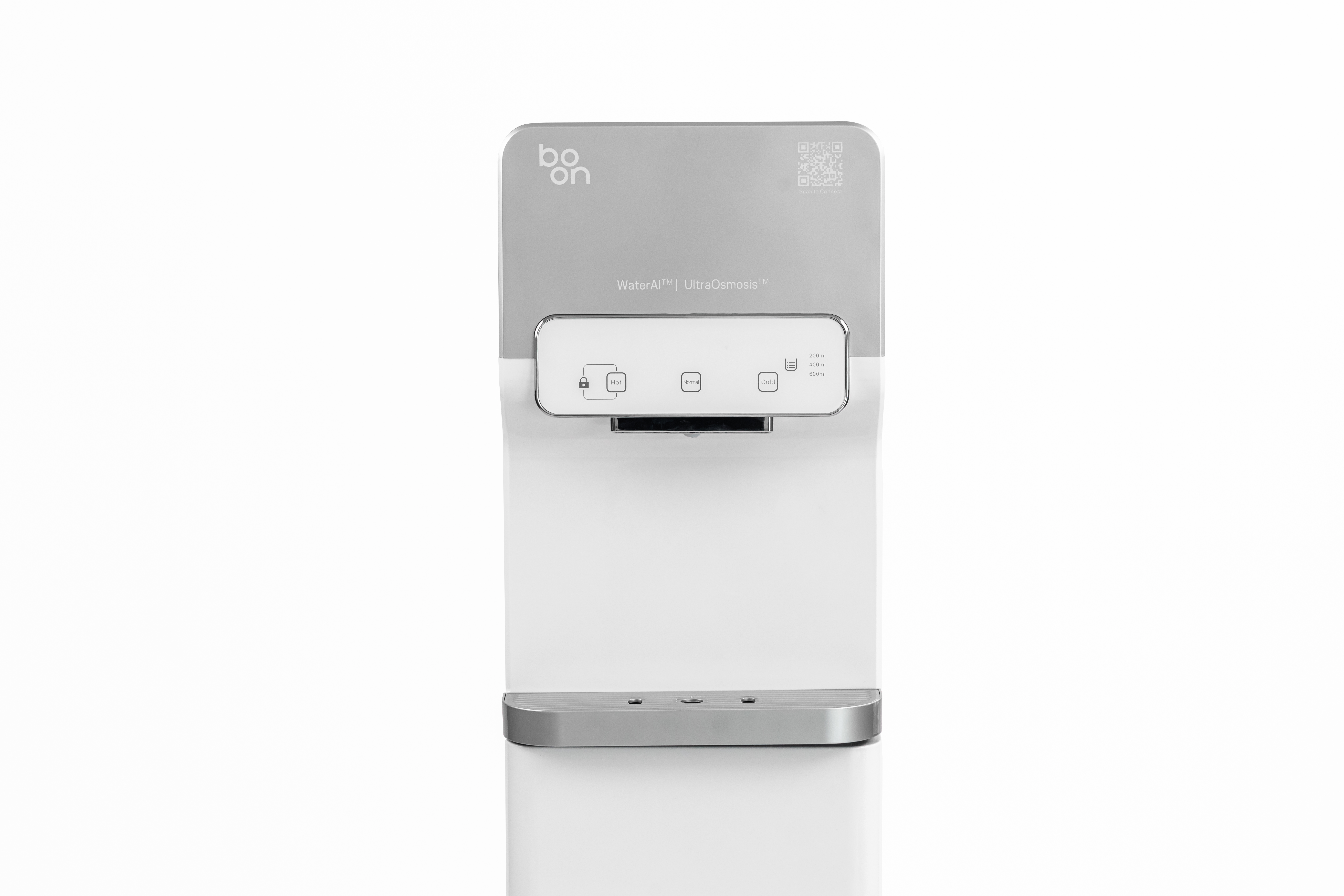
Boon’s 8-stage UltraOsmosis process removes the full range of dissolved contaminants and then balances minerals back, so the water is clean and still carries calcium and magnesium at sensible levels. You are not drinking flat, stripped water; you are drinking purified, mineral-balanced water.
WaterAI Monitoring
The WaterAI app shows your input and output water quality in real time, so you can see both that contaminants are being removed and that the water leaving the purifier is in a healthy range. WaterAI won the iF Design Award 2026.
Free Professional Installation
Boon’s technicians measure your input water and verify output quality at installation, at no extra cost, so the purifier is matched to your real supply from day one. If your water is hard or from a borewell, see our hard water guide and borewell water guide.
Safe and mineral-balanced, not stripped and flat: Boon’s 8-stage UltraOsmosis with mineral balancing, WaterAI monitoring, and free professional installation.
Frequently Asked Questions
Does an RO purifier remove minerals from water?
Yes, the RO membrane removes dissolved minerals such as calcium and magnesium along with contaminants, because it cannot tell good minerals from bad ones. This is why good RO purifiers add a mineral-balancing stage that reintroduces healthy minerals after purification. The result is water free of contaminants and still containing calcium and magnesium at sensible levels. So plain RO reduces minerals, but a modern RO purifier with mineral balancing gives you both.
Is RO water unhealthy because it has fewer minerals?
For most people, no. The vast majority of the minerals your body needs come from food, not water, so the reduction from RO is nutritionally minor. The bigger factor in Indian groundwater is the contaminants RO removes, such as nitrate, fluoride, arsenic and excess hardness. A modern RO purifier with mineral balancing addresses the concern by adding minerals back, so the water is both safe and mineral-balanced.
What is mineral balancing or remineralization in an RO purifier?
Mineral balancing, sometimes called remineralization, is a stage after the RO membrane that reintroduces healthy minerals like calcium and magnesium into the purified water. It corrects the one drawback of reverse osmosis by restoring taste and mineral content while keeping contaminants out. Boon’s 8-stage UltraOsmosis includes mineral balancing, so the water is purified and pleasant rather than flat.
Do I even need RO if my water has low TDS?
If your water genuinely has low TDS and is free of dissolved contaminants, you may not need RO; a UV or UF purifier could be sufficient for microbial safety. RO becomes the right choice when TDS is high or when the water carries dissolved contaminants such as fluoride, arsenic, nitrate or hardness, which UV and UF cannot remove. Check your actual tap TDS and contaminants first, then match the technology to your water.
Does RO water cause mineral deficiency?
For people eating a normal diet, drinking RO water does not cause mineral deficiency, because food is the main source of minerals. The World Health Organization has discussed the minerals in drinking water, and modern purifiers respond by balancing minerals back into RO water. If you want both safety and minerals, choose an RO purifier with a mineralisation stage, which is standard on Boon’s home range.
Boon home purifiers: 8-stage UltraOsmosis with mineral balancing, WaterAI monitoring, and free professional installation. Purified and mineral-balanced, not stripped.