Water quality in Guwahati
Where 190 mg/L sits
Your area reads Ideal. BIS rates water up to 500 mg/L as acceptable and 150–300 mg/L as ideal for taste and health.
What this means for you in Guwahati
Taste
Generally clean and light to drink.
Health
Within safe limits, though local supply can vary by season and building.
Appliances
Low scaling risk on taps and appliances.
What to use
A UV/UF purifier is usually enough; RO with mineral balance still helps.
Other parameters that matter
| Parameter | BIS limit | Why it matters |
|---|---|---|
| Bacteriological (E. coli / coliform) | Nil in any 100 ml | Causes stomach infections; needs UV or boiling. |
| Fluoride | 1.0 mg/L (max 1.5) | Excess causes dental & skeletal fluorosis. |
| Arsenic | 0.01 mg/L | Toxic; long-term exposure is carcinogenic. |
| Nitrate | 45 mg/L | Risky for infants (blue-baby syndrome). |
| Iron | 0.3 mg/L | Metallic taste, staining of fixtures & clothes. |
| Total hardness | 200 mg/L (max 600) | Scaling on taps, geysers & appliances. |
Regional watch
The CGWB Annual Ground Water Quality Report (2023 monitoring) flagged iron above BIS limits at one or more locations in the Guwahati district. If you draw borewell water, get these tested specifically.
Microbiological note
Bacterial safety (E. coli/coliform) is not part of chemical groundwater monitoring, so it needs a lab test of your own tap, and varies with pipe leaks and monsoon. UV purification (built into Boon purifiers) inactivates bacteria and viruses; RO removes the dissolved contaminants above.
Why is TDS like this in Guwahati?
Most Indian cities draw heavily on groundwater, which dissolves minerals and salts from the soil and rock it sits in. Over-extraction, ageing pipes and local geology push dissolved solids (TDS), hardness and sometimes fluoride, nitrate or arsenic above safe limits. City taps often blend treated municipal supply with borewell water, so two buildings on the same street can read very differently — and levels shift with the seasons, usually peaking just before the monsoon. The figure above is an indicative area reading from government monitoring, so your own tap can differ; testing it twice a year is a good habit.
Read our full guide to TDS & how to reduce it ›How Guwahati compares
Among the cities we map, Guwahati has the 4th lowest average groundwater TDS — within the BIS acceptable limit of 500 mg/L, against a median of 616 mg/L across those cities.
Individual monitoring points around Guwahati range from 106 to 264 mg/L. An average hides that spread, so your own borewell or municipal line can read well above or below 190 mg/L — one more reason to test your actual supply.
06 · Best fit for Guwahati
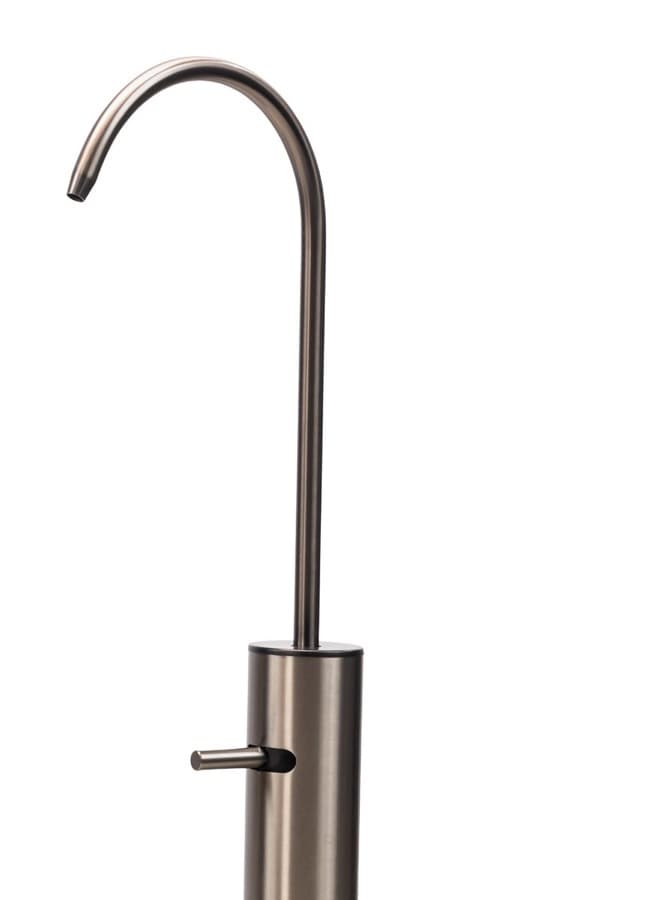
Boon Tap
Boon Tap under sink RO water purifier · from ₹23,500
TDS here averages ~190 mg/L (within BIS limits). Boon Tap keeps it safe with mineral balance and real-time monitoring.
Guwahati water — questions
What is the TDS of water in Guwahati?
Groundwater near Guwahati has an average TDS of about 190 mg/L, within the BIS acceptable limit of 500 mg/L, based on government monitoring data (CGWB groundwater monitoring 2018-2021 (EC-derived TDS), 2021). Levels range roughly 106 to 264 mg/L across nearby monitoring points.
Is tap water safe to drink in Guwahati?
TDS around 190 mg/L is within BIS limits, but municipal and borewell supply varies by building and season, so test your own water and use a purifier with monitoring to be sure.
Do I need an RO water purifier in Guwahati?
Possibly not for TDS alone, but an RO purifier with mineral balance still protects against seasonal spikes and other contaminants in Guwahati.
Reports for other cities
Data sources
- CGWB groundwater monitoring 2018-2021 (EC-derived TDS)
- CGWB National Groundwater Quality 2018-2021 (EC-derived TDS)
- CGWB Annual Ground Water Quality Report 2024 (2023 monitoring)
- CGWB district groundwater brochures & state reports (2013-2024)
- CGWB Ground Water Quality (Manual - Chemical Parameters) via India-WRIS National Water Data Portal (station-level, 2015-2023)
- Pincode and locality coordinates: GeoNames postal codes, CC BY 4.0
Primary datasets: Central Ground Water Board (CGWB) and India-WRIS, Government of India; limits per BIS IS 10500.
Disclaimer: Figures are indicative area estimates from government groundwater monitoring nearest to this location and may differ from your exact tap or municipal supply. They are not a substitute for a lab test of your own water. This page is general information, not medical advice, and any product suggestion is general guidance based on typical area readings, not a diagnosis of your supply. For health concerns, consult a qualified professional.